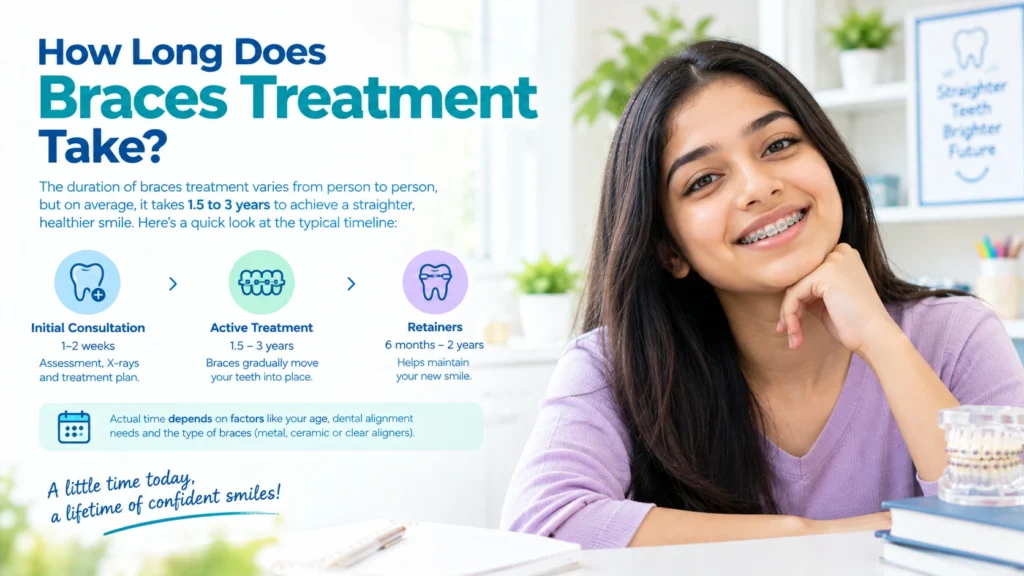
It is usually the first question patients ask, and it is a fair one. Braces are a commitment of time, effort, and money, so you want to know when you will finally see the finished result. The honest answer is that it depends. Most people wear braces for somewhere between 12 and 36 months, but your own timeline is shaped by your teeth, your age, the type of braces you choose, and how closely you follow instructions.
This guide explains what really determines the length of treatment, what a typical timeline looks like, and what you can do to avoid unnecessary delays.
What Patients Are Really Asking
When someone searches for how long braces take, they are rarely asking for a single number. They want to know whether their own case will be quick or slow, whether adults take longer than teenagers, whether certain braces are faster, and how the timeline connects to cost. They also want to feel confident that the person guiding them knows what they are doing. A trustworthy Braces Specialist in Pune will answer all of these during the first consultation with a personalized estimate rather than a generic promise.
The Average Braces Treatment Timeline
As a general guide, here is what most patients can expect:
- Mild cases (minor crowding or small gaps): around 6 to 12 months
- Moderate cases (noticeable crowding, spacing, or bite issues): around 12 to 24 months
- Complex cases (severe crowding, jaw discrepancies, impacted teeth): around 24 to 36 months, sometimes longer
These are estimates, not guarantees, and your orthodontist may revise them as treatment progresses and your teeth respond. Every mouth is different, so comparing your timeline with a friend’s or a family member’s is rarely helpful. Teeth move slowly and safely by design. Pushing them too fast can damage roots and the surrounding bone, which is why a reliable treatment plan prioritizes steady, controlled movement.
Key Factors That Affect How Long Braces Take
1. Severity of the Problem
The further your teeth need to travel, the longer treatment takes. A small rotation or narrow gap can be corrected quickly, while a significant overbite, crossbite, or crowded arch needs more time and more careful staging.
2. Your Age
Children and teenagers often respond faster because their jawbones are still growing and more flexible. Adults can absolutely achieve excellent results, but their bone is denser, so movement can be a little slower. Age should never stop you from starting treatment, but it is worth knowing it can influence the schedule.
3. Type of Braces
Metal braces are the most common and highly effective for all case types. Ceramic braces work similarly but are less visible. Self-ligating braces reduce friction and may mean fewer adjustment visits. Clear aligners suit mild to moderate cases and offer flexibility, though results depend heavily on wearing them for the recommended hours each day. Your orthodontist will recommend the option that fits both your goals and your case.
4. Whether Extractions or Additional Appliances Are Needed
Some cases require removing teeth to create space, or using expanders, elastics, or headgear to correct jaw alignment. These extra steps add stages to the plan and can lengthen the overall duration.
5. Your Oral Health
Healthy gums and strong teeth move predictably. Untreated cavities or gum inflammation can pause treatment until they are resolved, because teeth cannot be safely moved while infection is present.
The Stages of Braces Treatment
Understanding the stages makes the process feel less overwhelming.
Consultation and planning (1 to 2 visits): This includes a clinical exam, X-rays, scans, and photographs. During this first stage, an experienced Orthodontist in Kalyani Nagar will assess your bite, explain your options, and give a realistic timeline.
Fitting the braces (1 visit): The brackets and wires are placed, usually in a single appointment lasting 60 to 90 minutes.
Active treatment (most of the journey): You visit every 4 to 8 weeks for adjustments as wires are changed and teeth gradually shift into position.
Finishing and removal: Fine-tuning ensures the bite is balanced, then braces are carefully removed.
Retention: After braces come off, you wear retainers to hold the new alignment. This phase is not optional, since teeth tend to drift without support.
How Cost Relates to Treatment Duration
Many patients want to understand how the timeline affects the price. In general, longer and more complex treatments cost more because they involve more appointments, more materials, and more clinical time. When comparing Teeth Braces Cost near Me, always ask what the quoted fee includes, such as monthly adjustments, retainers, and emergency visits, so you can compare options fairly. A slightly higher fee from a clinic that includes follow-up care can work out cheaper than a low upfront price with hidden extras.
How to Avoid Delays and Finish on Time
The good news is that a lot of the timeline is within your control. Patients who follow a few simple rules often finish earlier than expected.
Attend every appointment. Missed or postponed visits stall progress. Regular check-ups with a dependable Dentist in Kalyani Nagar Pune also help catch problems early, such as a loose bracket or a poking wire.
Wear elastics and aligners as directed. Rubber bands only work if they are worn consistently. Skipping them is one of the most common reasons treatment runs long.
Avoid damaging foods. Hard, sticky, and chewy foods can break brackets and bend wires, forcing repair visits and slowing movement. Think twice before biting into ice, hard candy, or sticky toffee.
Keep your teeth very clean. Brush after meals, floss with threaders or use a water flosser, and keep up with professional cleaning. Hygiene is easier to manage when you schedule regular visits to a trusted Dentist in Kalyani nagar, who can remove plaque that home brushing misses.
Follow retainer instructions. Treatment is not truly finished until retention is complete. Wearing your retainer as advised protects the time and money you have already invested.
What Progress Looks Like Month by Month
Many patients worry when they cannot see dramatic changes in the first few weeks. This is completely normal. In the first three months, teeth begin to level and align, and you may feel mild soreness after each adjustment that fades within a few days. Between months four and twelve, crowding and gaps start to close visibly, and your bite begins to improve. The later stages are about fine-tuning, where small movements perfect the final alignment. Taking progress photos every month can help you stay motivated, because the daily change is slow but the overall transformation is remarkable.
Can Braces Treatment Be Made Faster?
Some options can shorten the timeline in suitable cases, including self-ligating brackets, modern wire technology, and carefully planned digital treatment. However, no method safely rushes biology. Be cautious of anyone promising dramatically short timelines for complex problems. A reputable provider will tell you the truth about what is realistic for your case.
Why Choosing the Right Clinic Matters
An accurate timeline begins with an accurate diagnosis. A skilled clinician plans tooth movement carefully, adjusts the plan as your teeth respond, and communicates clearly at every stage.
At Braces and Smiles MultiSpeciality Dental Clinic, Dr. Prashant Gupta focuses on detailed case planning and transparent communication, so patients understand their expected timeline and cost from the very beginning. The clinic is known for a calm, supportive environment that suits children, teenagers, and adults alike. For patients who prefer one location for check-ups, cleaning, and orthodontic care, a well-equipped Dental Clinic in Kalyani Nagar makes visits easier to fit into a busy schedule, which in turn helps treatment stay on track.
If you ever need to shift cities or want a second opinion, a qualified Dentist in Pune can review your records and advise on continuing or adjusting your plan.
Frequently Asked Questions
Q1. What is the average time to wear braces?
Most patients wear braces for 12 to 36 months. Simple cases can finish in under a year, while complex ones may take longer.
Q2. Do adults need braces for longer than teenagers?
Sometimes, because adult bone is denser and teeth move a little more slowly. Many adults still finish within the typical range with consistent care.
Q3. Can I speed up my treatment?
You can avoid delays by attending appointments, wearing elastics, keeping teeth clean, and avoiding foods that break brackets. Your orthodontist may also suggest options suited to faster movement in appropriate cases.
Q4. Are clear aligners quicker than metal braces?
Not always. For mild to moderate cases they can be comparable or slightly shorter, but complex problems often respond better to traditional braces.
Q5. How long do I need a retainer after braces?
Retainers are usually worn full time at first and then at night for years. Many orthodontists recommend long-term night wear to prevent relapse.
Q6. Is the treatment time the same as the cost estimate period?
Not exactly. Cost depends on case complexity, appliance type, and what the fee includes, so ask for a clear written breakdown at your consultation.
Ready to Find Out Your Own Timeline?
The only way to know exactly how long your braces treatment will take is to have your teeth properly assessed. A short consultation can give you a clear timeline, a straightforward cost estimate, and a plan you feel confident about.
Book your appointment with Dr. Prashant Gupta at Braces and Smiles MultiSpeciality Dental Clinic today and take the first step toward a straighter, healthier smile.