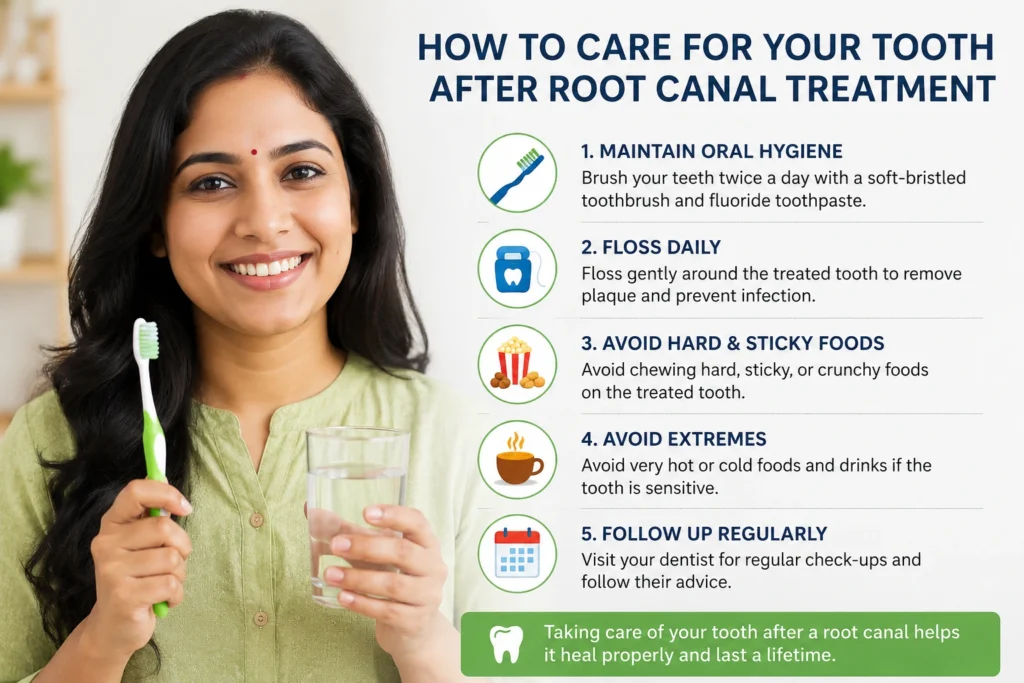
So you have just completed your root canal procedure — first of all, congratulations on taking that important step toward saving your natural tooth! The treatment itself is only half the journey. What you do in the days and weeks that follow plays an equally crucial role in how quickly and comfortably you recover.
At Braces and Smiles MultiSpeciality Dental Clinic, our lead endodontist Dr. Prashant Gupta has guided thousands of patients through successful recoveries. In this detailed guide, he shares everything you need to know — from the first 24 hours to long-term tooth maintenance — so your treated tooth lasts a lifetime.
What Actually Happens to Your Tooth After Root Canal Treatment?
During a root canal, the infected or damaged pulp inside your tooth is carefully removed, the canals are cleaned and shaped, and the space is sealed with a biocompatible material called gutta-percha. In most cases, a temporary or permanent filling is placed on the same visit, and a crown is recommended shortly after.
Because the tooth’s nerve tissue has been removed, it no longer responds to temperature or pain stimuli the way a vital tooth does. However, the surrounding tissues — gums, ligaments, and bone — are still alive and may experience mild inflammation as they heal.
The Critical First 24 Hours: What You Must Do
The first day after your root canal sets the tone for the entire healing process. Follow these steps carefully:
1. Allow the Anaesthesia to Wear Off Completely
Local anaesthesia typically lasts two to four hours. During this time, avoid eating on the treated side — you may accidentally bite your cheek or tongue without realising it.
2. Manage Mild Discomfort Proactively
Over-the-counter pain relievers such as ibuprofen or paracetamol work well for most patients. Take the dose recommended by Dr. Prashant Gupta before the anaesthesia wears off so you stay ahead of any discomfort.
3. Stick to Soft Foods
For the first 24 hours, choose foods like curd rice, khichdi, mashed potatoes, soups, and smoothies. Avoid anything hard, crunchy, sticky, or excessively hot or cold.
4. Do Not Smoke or Consume Alcohol
Smoking impairs blood circulation and delays healing. Alcohol can interact with medications and increase inflammation. Avoid both for at least 48 to 72 hours.
5. Keep Your Head Elevated
Sleeping with your head slightly raised using an extra pillow reduces swelling and throbbing in the treated area during the first night.
Complete Do’s and Don’ts After Root Canal Treatment
Do’s
- Brush gently twice a day with a soft-bristled toothbrush
- Floss daily, being gentle around the treated tooth
- Rinse with warm salt water after meals
- Take all prescribed antibiotics and painkillers as directed
- Eat on the opposite side of the mouth until the crown is placed
- Return for your crown appointment within 2–3 weeks
- Stay hydrated and maintain a nutritious diet
- Keep all follow-up visits with your dentist
Don’ts
- Don’t chew on the treated tooth before crown placement
- Don’t skip your antibiotic course even if you feel fine
- Don’t ignore persistent pain or swelling beyond 5 days
- Don’t eat hard, sticky, or crunchy foods for 1–2 weeks
- Don’t use the tooth to open packaging or bite nails
- Don’t delay getting the permanent crown
- Don’t probe the treated area with your tongue repeatedly
- Don’t miss follow-up X-rays
Managing Post-Treatment Pain and Sensitivity
Some degree of sensitivity and mild soreness is expected for three to five days after the procedure, especially when biting down. This is a normal response of the periodontal ligament surrounding the tooth root.
When Is Pain Normal?
- Mild to moderate aching for 2–5 days post-procedure
- Slight tenderness when pressing on the treated tooth
- Minor swelling of the surrounding gum tissue
When Should You Call Your Dentist Immediately?
- Severe, throbbing pain that does not respond to pain medication
- Visible swelling of the face, jaw, or neck
- Fever above 101°F (38.3°C)
- The temporary filling or crown falls out
- An allergic reaction to prescribed medication
- Return of the original symptoms or a bad taste in your mouth
Why the Crown Is Non-Negotiable After a Root Canal
This is one of the most overlooked aspects of post-root canal care. After the pulp is removed, the tooth loses its internal moisture source and becomes more brittle. Without the protection of a dental crown, your treated tooth is highly susceptible to fracture — sometimes irreparably.
Dr. Prashant Gupta strongly advises all patients to schedule their crown appointment within two to three weeks of completing the root canal. Delaying crown placement is one of the top reasons root canals “fail” — not because the procedure was incorrect, but because the tooth was left unprotected for too long.
Patients seeking Root Canal Treatment in Kalyani Nagar at our clinic benefit from in-house ceramic crown fabrication, significantly reducing the wait time compared to clinics that outsource laboratory work.
Oral Hygiene Routine After Root Canal Treatment
A treated tooth can still develop decay around its margins or at the base of the crown. Your oral hygiene routine is just as important — perhaps more so — after a root canal.
Brushing
Use a soft-bristled toothbrush and fluoride toothpaste. Brush for two full minutes, twice daily. Be gentle around the treated area, especially if the gums are still tender. Replace your toothbrush every three months.
Flossing
Floss once daily, guiding the floss gently between the treated tooth and its neighbours. If you have a temporary crown, be careful not to pull the floss upward, which can dislodge it — instead, slide it out sideways.
Mouthwash
An antibacterial mouthwash — ideally chlorhexidine-based as recommended by your dentist — can help reduce the bacterial load in the mouth during healing. Use it as directed, typically for seven to ten days post-procedure.
Salt Water Rinses
Dissolve half a teaspoon of salt in a glass of warm water and rinse gently for 30 seconds after meals. This simple home remedy reduces inflammation and keeps the area clean.
Diet Recommendations: What to Eat and What to Avoid
Best Foods During Recovery
- Soft cooked rice, khichdi, dal, idli
- Yogurt, paneer, eggs (well-cooked), smoothies
- Mashed vegetables, soups, oatmeal
- Ripe bananas, soft fruits without seeds
- Lukewarm (not hot) liquids to stay hydrated
Foods to Avoid for 2–3 Weeks
- Hard foods: raw carrots, nuts, chips, hard candy
- Sticky foods: chewing gum, caramel, paan
- Extremely hot or cold beverages
- Carbonated drinks and acidic juices
- Chewy meats that require prolonged biting force
Long-Term Care: Making Your Root Canal Last a Lifetime
A properly treated and restored root canal tooth can last as long as your natural teeth — sometimes even a lifetime — with the right care. Here is how to protect your investment:
- Regular dental check-ups: Visit your dentist every six months for professional cleaning and X-rays to monitor the treated tooth.
- Protect from grinding: If you grind your teeth at night (bruxism), ask about a custom night guard. Grinding exerts extreme forces on crowned teeth.
- Avoid using teeth as tools: Never use your teeth to open bottles, packaging, or bite nails — especially the treated tooth.
- Monitor for changes: Report any new sensitivity, pain, or swelling around the treated area to your dentist promptly.
- Maintain gum health: Gum disease can undermine even the best root canal treatment. Floss daily and treat any early signs of gum problems quickly.
Patients who have undergone Painless Root Canal Treatment in Pune at our clinic often remark how different the experience was from what they expected — no drama, no prolonged pain. That positive outcome continues well beyond the procedure, provided the aftercare guidelines above are followed diligently.
As a trusted Dentist in Kalyani Nagar, Dr. Prashant Gupta and his team are always available to answer your post-treatment questions, no matter how small they seem.
Why Patients Choose Braces and Smiles MultiSpeciality Dental Clinic
Whether you need an emergency consultation or a planned restorative procedure, the Braces and Smiles MultiSpeciality Dental Clinic — a leading Dental Clinic in Kalyani Nagar Pune — offers:
- State-of-the-art rotary endodontic equipment for precise, faster root canals
- Digital X-rays with minimal radiation exposure
- Apex locators for accurate canal length measurement
- In-house ceramic crowns for faster turnaround
- Comfortable, anxiety-free clinic environment
- Transparent pricing with no hidden costs
- Experienced, empathetic clinical team led by Dr. Prashant Gupta
For those exploring options for Affordable Root Canal Treatment in Kalyani Nagar, we offer flexible payment plans and accept all major dental insurance networks, making quality care accessible without financial stress.
If you or someone you love is experiencing tooth pain and has been searching for Root Canal Treatment in Pune, do not delay — untreated infections can spread to neighbouring teeth and, in rare cases, to other parts of the body.
Frequently Asked Questions (FAQs)
Q1. How long does it take to fully recover after a root canal?
Q2. Is it normal to feel pain a week after a root canal?
Q3. Can I brush my teeth the same night after a root canal?
Q4. How long after root canal can I eat normally?
Q5. What happens if I delay getting the crown after root canal?
Q6. Is a root canal a permanent solution?
Q7. Can I exercise after root canal treatment?
Avoid strenuous exercise for the first 24–48 hours, as it can increase blood pressure and promote bleeding or swelling. Light walking is generally fine. Resume normal exercise once the initial soreness subsides, typically after two to three days.