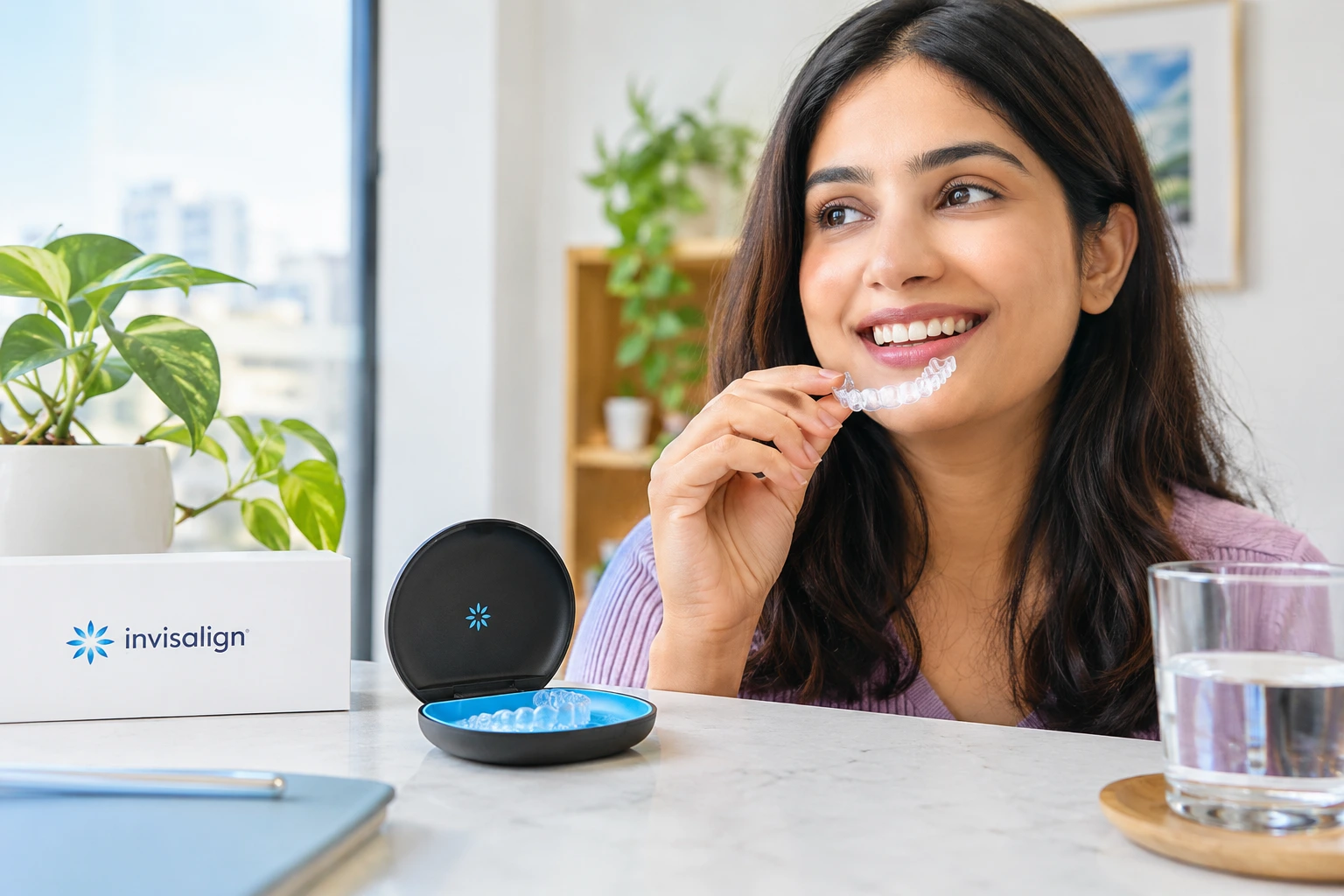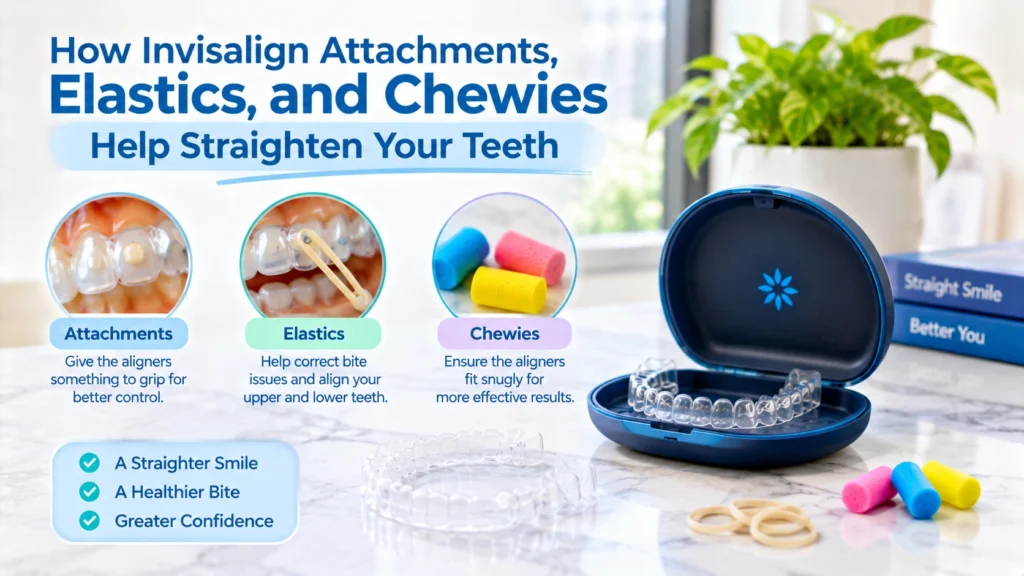
Many people choose clear aligners because they look simple: a transparent tray, a new set every couple of weeks, and gradually straighter teeth. Then, a few weeks into treatment, the dentist mentions small bumps on your teeth, tiny rubber bands, or a minty cylinder to bite on. Suddenly the “simple” treatment feels more complicated.
These extras are not add-ons designed to make treatment harder. They are precision tools that help aligners do their job. This guide explains what Invisalign attachments, elastics, and chewies are, how each one works, and how to use them so your treatment stays on schedule.
Why Aligners Need Extra Help
Plastic aligners apply gentle, controlled pressure to move teeth. On their own, they handle many movements well, such as tipping a tooth slightly or closing small gaps. But some movements are harder to achieve: rotating a rounded tooth, moving a tooth up or down, or correcting how the upper and lower jaws meet.
That is where attachments, elastics, and chewies come in. Together, they improve grip, direct force, and ensure the aligners fit snugly. Think of them as the support team that makes sure every aligner delivers its full effect.
What Are Invisalign Attachments?
Attachments are small, tooth-coloured bumps bonded to the surface of selected teeth. They are made from composite resin, the same type of material used for tooth-coloured fillings, so they blend in with your natural teeth.
How Attachments Work
Each attachment creates a defined edge for the aligner to push against. Without it, a smooth, round tooth can slip out of the plastic’s grip. With it, the aligner holds firmly and transmits force exactly where it is needed.
Attachments commonly help with:
- Rotating twisted teeth
- Moving teeth up or down (intrusion and extrusion)
- Closing gaps more evenly
- Improving how the aligner anchors to the teeth
- Shifting teeth bodily rather than just tilting them
What to Expect
Placement is quick and usually painless. The dentist uses a template, applies the resin, and hardens it with a light. There is no drilling in most cases. At the end of treatment, attachments are polished off easily, leaving the tooth surface smooth.
Many patients worry that attachments will look obvious. In practice, they are small and match your tooth shade, so most people never notice them in daily conversation.
What Are Elastics and Why Are They Used?
Elastics are small rubber bands that connect the upper and lower arches. They hook onto tiny buttons bonded to the teeth or onto cut-outs in the aligner.
The Role of Elastics
Elastics apply extra force across the jaws, which helps correct bite relationships. They are commonly used to treat:
- Overbites, where upper front teeth sit too far forward
- Underbites, where the lower teeth sit ahead of the upper teeth
- Crossbites and open bites
- Midline shifts between the upper and lower teeth
Because aligners alone mostly move teeth within each arch, elastics add the “jaw-to-jaw” effect that fixes how your bite fits together.
How to Wear Elastics Properly
Elastics only work if you wear them consistently, typically 20 to 22 hours a day. Follow these tips:
- Change them at least once or twice daily, since they lose strength
- Take them off when eating and put fresh ones on afterward
- Always carry spares with you
- Wear the exact pattern your dentist prescribes
- Do not double up or skip, as this can move teeth in the wrong direction
If your elastics keep snapping or you run out, call the clinic instead of waiting for your next visit. Missing a few days can slow progress noticeably.
What Are Chewies?
Chewies are small cylindrical cushions, usually made from soft foam or similar material. You place them between the aligner and your teeth and bite down on them for a few minutes at a time.
Why Chewies Matter
When you wear an aligner, tiny air gaps can appear between the plastic and your tooth. Biting on a chewie pushes the aligner fully into place, which improves fit and ensures the pressure is applied where it is needed. A properly seated aligner moves teeth more predictably than one that is only partly engaged.
How to Use Chewies
- Insert the aligner and press it into place with your fingers
- Place the chewie on the back teeth or on the area your dentist indicates
- Bite down gently for 2 to 5 minutes
- Repeat especially when starting a new set of aligners
- Do not chew on it like gum or leave it in the mouth for long
Many patients find that chewies also reduce soreness, because a well-fitting aligner distributes pressure more evenly.
How the Three Tools Work Together
Attachments, elastics, and chewies each have a distinct role:
| Tool | Main Purpose | Best For |
|---|---|---|
| Attachments | Improve grip and direct tooth movement | Rotations, vertical moves, complex shifts |
| Elastics | Correct the bite between upper and lower jaws | Overbite, underbite, crossbite |
| Chewies | Seat aligners fully | Better fit and comfort |
Not every patient needs all three. Your orthodontic plan is customised, and the tools used depend on your teeth, your bite, and the movements required.
Common Mistakes That Slow Treatment
- Wearing aligners fewer than 20 hours a day
- Forgetting to use elastics or chewies as directed
- Ignoring a broken or missing attachment
- Switching to a new aligner set too early
- Skipping scheduled review visits
- Poor hygiene around attachments, leading to staining or gum irritation
If an attachment pops off, contact your dentist soon. Delaying can cause the aligner to lose grip and may require refinements later.
Caring for Your Teeth While Using These Tools
Attachments create small ridges where plaque can collect, so careful cleaning matters. Brush after every meal before putting your aligners back in, floss daily, and clean your aligners as instructed. Avoid drinking anything other than water while wearing them, since sugary or coloured drinks can stain the plastic and the attachments.
Why the Dentist You Choose Matters
These tools only work when they are planned and positioned accurately. Digital planning, correct attachment placement, and careful monitoring are what make clear aligners predictable. A skilled orthodontic provider will explain each step, adjust the plan when needed, and give you clear instructions at every visit.
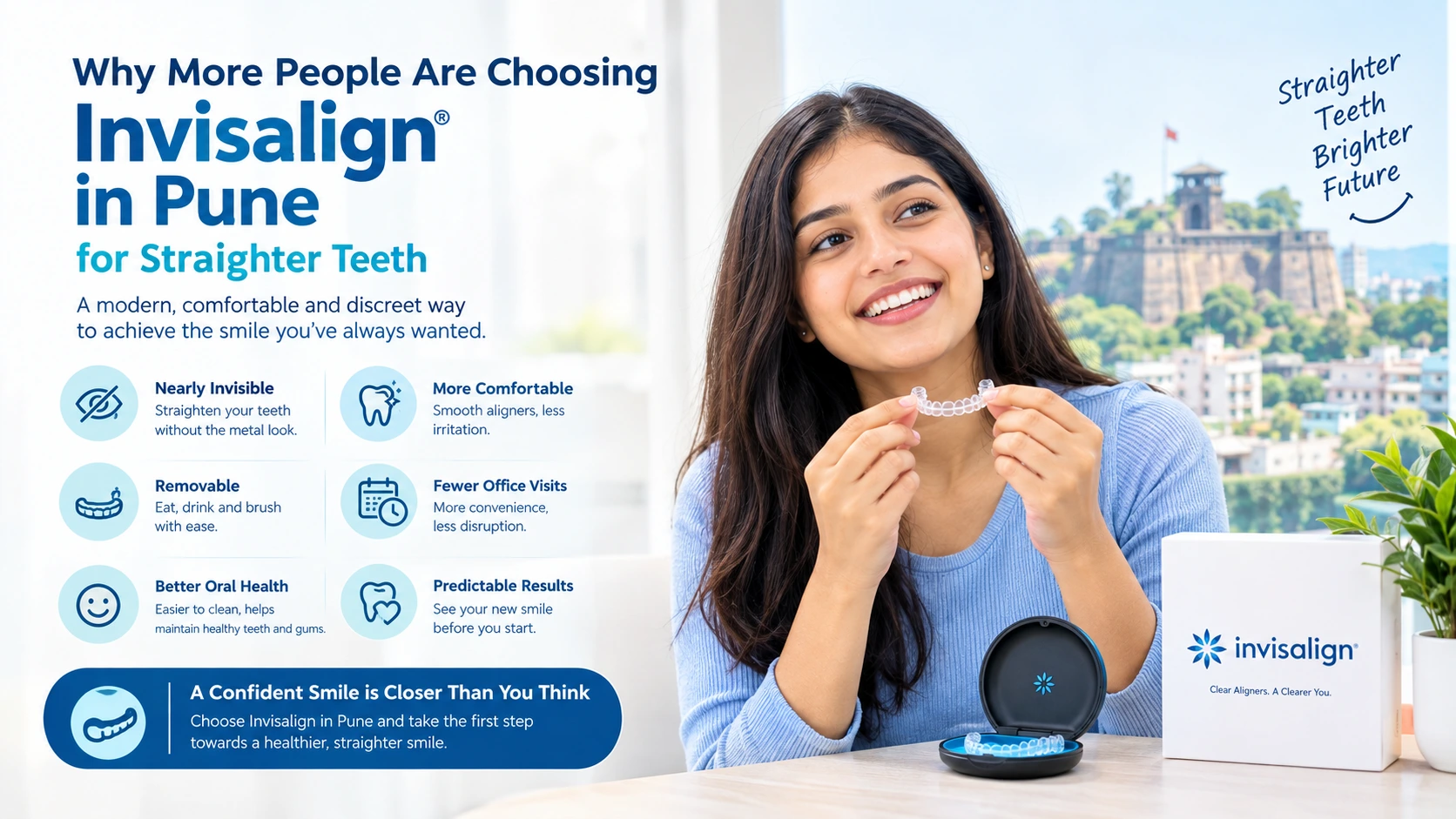
Patients looking for Invisalign Treatment in Pune often find that experience and follow-up care matter more than the aligner brand alone. Because progress checks are needed every few weeks, convenience also plays a major role in staying on track.
If you live or work on the eastern side of the city, choosing Invisalign Treatment in Kalyani Nagar reduces travel time and makes it far easier to attend every review. People searching for the Best Dental Clinic in Kalyani Nagar should look beyond reviews and ask about digital planning, clear pricing, and aftercare support.
Care and Guidance at Braces and Smiles MultiSpeciality Dental Clinic
At Braces and Smiles MultiSpeciality Dental Clinic, each aligner plan begins with a careful examination and digital scans. Dr. Prashant Gupta explains whether you need attachments, elastics, or chewies, why they are recommended, and how to use them correctly. Patients receive written instructions and have easy access to help if an attachment comes off or an elastic routine is unclear.
The approach is simple: honest guidance, gentle care, and a treatment plan that fits your lifestyle. Orthodontic, cosmetic, and general dental services are available in one place, so you can address cavities or gum health alongside your straightening journey.
For ongoing care, a trusted Dentist in Kalyani Nagar Pune can help you keep your teeth and gums healthy throughout treatment. Between aligner reviews, a reliable Dentist in Kalyani nagar is also useful for routine cleanings that keep attachments and teeth in good condition.
Frequently Asked Questions
Q1. Do all Invisalign patients need attachments?
No. Attachments are used only when extra grip or specific movements are required. Mild cases may need few or none.
Q2. Are attachments painful or permanent?
They are not painful to place, and they are not permanent. They are removed and polished off after treatment.
Q3. Why do I need elastics with aligners?
Elastics correct how the upper and lower teeth meet. They are prescribed when the bite, not just tooth position, needs adjustment.
Q4. How often should I use chewies?
Use them when starting a new aligner and whenever the aligner feels loose. Your dentist will advise the exact routine.
Q5. What if an attachment falls off?
Keep wearing your aligners and contact your dentist promptly so it can be replaced.
Q6. Can I remove attachments early?
It is not advisable. Removing them before treatment ends can reduce effectiveness and extend your overall timeline.
Ready to Start Your Clear Aligner Journey?
Understanding how attachments, elastics, and chewies work makes treatment less intimidating and more successful. With the right plan and a supportive dental team, clear aligners can deliver a beautifully aligned, healthy smile.
Book a consultation with Dr. Prashant Gupta at Braces and Smiles MultiSpeciality Dental Clinic to discuss your goals and receive a personalised treatment plan with transparent pricing.
Call or visit today to schedule your consultation and take the first step toward a straighter, more confident smile.