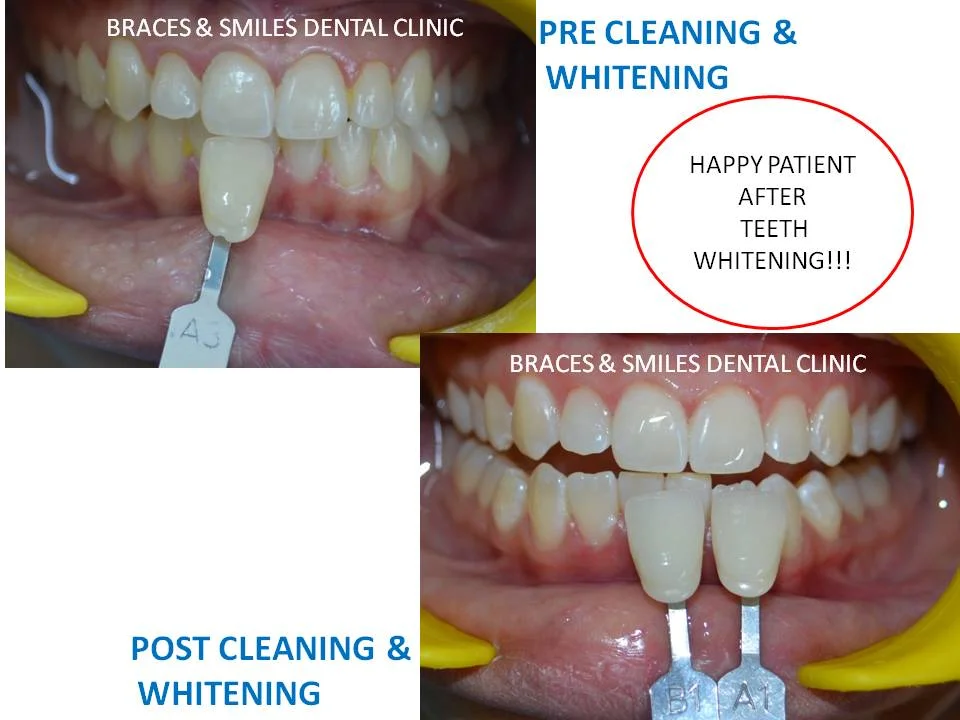
What Causes Teeth to Stain?
Teeth discoloration usually comes from one of two sources:
- Surface stains — from tea, coffee, red wine, tobacco, and other pigmented foods and drinks that build up on the outer enamel over time.
- Deeper discoloration — from aging, past illness, childhood infections, tooth trauma, or fractures that have darkened with time.
The right whitening approach depends on which type you have, so we assess your teeth first rather than applying a one-size-fits-all treatment.
Teeth Whitening Methods in Kalyani Nagar & Viman Nagar
In-Office Whitening Best for patients who want fast results or have heavier staining. Your dentist applies a professional-strength whitening material, left on for about 20 minutes and then rinsed off, sometimes repeated within the same visit. This is the quickest route to visible results and is done under direct supervision, which makes it the safest option for stronger concentrations. Afterward, we’ll advise avoiding very hot or cold food, and staining foods and drinks (turmeric, red wine, tobacco) for a couple of days.
At-Home Whitening (Dentist-Supervised) Best for patients without tooth sensitivity who prefer a gradual approach. We create a custom-fitted tray for your teeth and provide whitening gel to use overnight or for a set duration you’re given. It uses a milder concentration than in-office treatment, so results take longer to appear but are still dentist-guided and safe.
Over-the-Counter Products Whitening toothpastes and strips are widely available but noticeably less effective than professional treatment, and can be harmful to enamel with prolonged or excessive use. If you go this route, use products only as directed on the packaging, and check with us if you notice sensitivity.
Common Teeth Whitening Myths
Whitening weakens or cracks your teeth.” This isn’t true. Professional teeth whitening doesn’t affect the structural strength of your teeth or cause cracks. Some patients experience mild, temporary sensitivity, which typically resolves within 2 to 5 days.
“All whitening products work the same way.” They don’t — concentration, application method, and supervision all affect both results and safety. This is why we recommend discussing your options with a dentist rather than defaulting to over-the-counter products, especially if you have crowns, fillings, or existing sensitivity.
At Home Bleach:
This is recommended for patients who do not experience sensitivity in their teeth.
In this method, your dentist fabricates a customized tray for your teeth and then provides you with teeth whitening syringes. The tray with the material needs to be used only in the night or specific duration as recommended. It contains the diluted version of the material used at the dentist’s clinic. It takes more time than the quick results obtained at the dental clinic.
Is Teeth Whitening Safe?
Yes, when done correctly and matched to your specific case. We consider:
- The type and depth of your staining
- Your dental history, including any crowns or fillings
- Which whitening method suits your teeth and sensitivity level
We’ll always recommend what’s appropriate for your case — including telling you if whitening isn’t the right option, or if it should wait until another issue is addressed first.
Affordable Teeth Whitening Cost in Pune
Looking for affordable teeth whitening in Kalyani Nagar? Cost depends on the method:
- In-office whitening — typically higher upfront cost, but faster, supervised, and longer-lasting results.
- At-home dentist-supervised trays — generally more affordable than in-office treatment, with results building gradually over a few weeks.
- Over-the-counter products — lowest cost, but noticeably less effective and not dentist-supervised.
We’ll give you a clear, written cost estimate for your recommended treatment during your consultation — no guessing, no surprises.